System Components Overview
The Data Center Intelligent Fresh Air and Efficient Cooling Integrated Solution consists of multiple interconnected subsystems working in harmony to achieve optimal environmental control. This chapter provides a comprehensive breakdown of all hardware and software components, their functions, technical specifications, and interdependencies.
1.1 Fresh Air Path Module
The Fresh Air Path Module is responsible for introducing outdoor air into the data center, treating it to meet cleanliness and temperature requirements, and delivering it to the indoor environment. This module operates as the primary energy-saving mechanism through natural cooling when outdoor conditions permit.
1.1.1 Air Filtration System
The air filtration system consists of three stages of progressive filtration to ensure that outdoor air meets data center cleanliness standards before entering the facility:
- Primary Filter (G4 Grade): Removes large particles (>10μm) such as dust, pollen, and insects. Typical efficiency: 90% for particles >10μm. Replacement cycle: 3-6 months depending on outdoor air quality.
- Medium Filter (F7-F8 Grade): Captures medium-sized particles (1-10μm) including fine dust and aerosols. Typical efficiency: 80-90% for particles 1-10μm. Replacement cycle: 6-12 months.
- Chemical Filter (Activated Carbon): Removes gaseous contaminants including sulfur dioxide (SO₂), nitrogen oxides (NOₓ), and volatile organic compounds (VOCs) that can corrode IT equipment. Replacement cycle: 12-24 months based on gas concentration monitoring.
1.1.2 Electric Dampers
Electric dampers are motorized control valves that regulate airflow by adjusting blade angles. In this system, dampers serve multiple critical functions including fresh air intake modulation, natural cooling bypass control, and emergency shutdown capability. Key specifications include modulating control (0-100% opening), response time under 60 seconds for full stroke, and fail-safe positioning (normally closed for outdoor dampers, normally open for bypass dampers).
1.1.3 Variable Frequency Fans (VFD Fans)
Variable Frequency Drive fans provide adjustable airflow to match real-time cooling demand while minimizing energy consumption. These fans feature EC (Electronically Commutated) motors with efficiency ratings exceeding 90%, speed control range from 20% to 100% of maximum RPM, and integrated pressure sensors for constant pressure control. Typical specifications include airflow capacity of 10,000-50,000 m³/h per unit and noise levels below 75 dB(A) at maximum speed.
1.1.4 Cooling Coils
Cooling coils provide supplementary mechanical cooling when outdoor air temperature exceeds the natural cooling threshold. These heat exchangers use chilled water (7-12°C supply temperature) to reduce air temperature to the target supply air temperature. The coils feature copper tubes with aluminum fins, face velocity of 2.0-2.5 m/s, and capacity modulation through chilled water valve control.

Figure 1.1: Fresh Air Path Module in a Hyperscale Data Center Environment
1.2 Indoor Circulation Cooling Module
The Indoor Circulation Cooling Module handles the distribution of conditioned air within the data center and provides supplementary cooling capacity to maintain precise temperature control at the rack level.
1.2.1 Variable Frequency Precision Air Conditioners
These are high-efficiency, close-control air conditioning units specifically designed for data center environments. Unlike comfort cooling systems, precision air conditioners maintain tight temperature and humidity tolerances (±1°C, ±5% RH) and operate continuously with high sensible heat ratios (SHR > 0.95). Key features include variable-speed compressors for capacity modulation, EC fans for efficient air circulation, hot gas bypass for humidity control, and integrated controls with BMS connectivity.
1.2.2 Fan Wall Systems
Fan Wall systems consist of multiple EC fans arranged in a grid configuration to provide high-volume, low-velocity airflow with exceptional redundancy and efficiency. Each fan operates independently with N+1 or N+2 redundancy, ensuring continued operation even if individual fans fail. The modular design allows for easy maintenance and replacement without system shutdown. Typical configurations include 6-24 fans per wall unit, with total airflow capacity of 50,000-200,000 m³/h and power consumption of 0.15-0.25 W/(m³/h).
1.2.3 In-Row Cooling Units
In-Row Cooling Units are installed directly within server rows to provide close-coupled cooling with minimal air travel distance. This configuration maximizes cooling efficiency by reducing air mixing and temperature stratification. These units feature compact form factors matching standard rack widths (600mm), vertical or horizontal airflow configurations, and cooling capacities of 20-50 kW per unit.
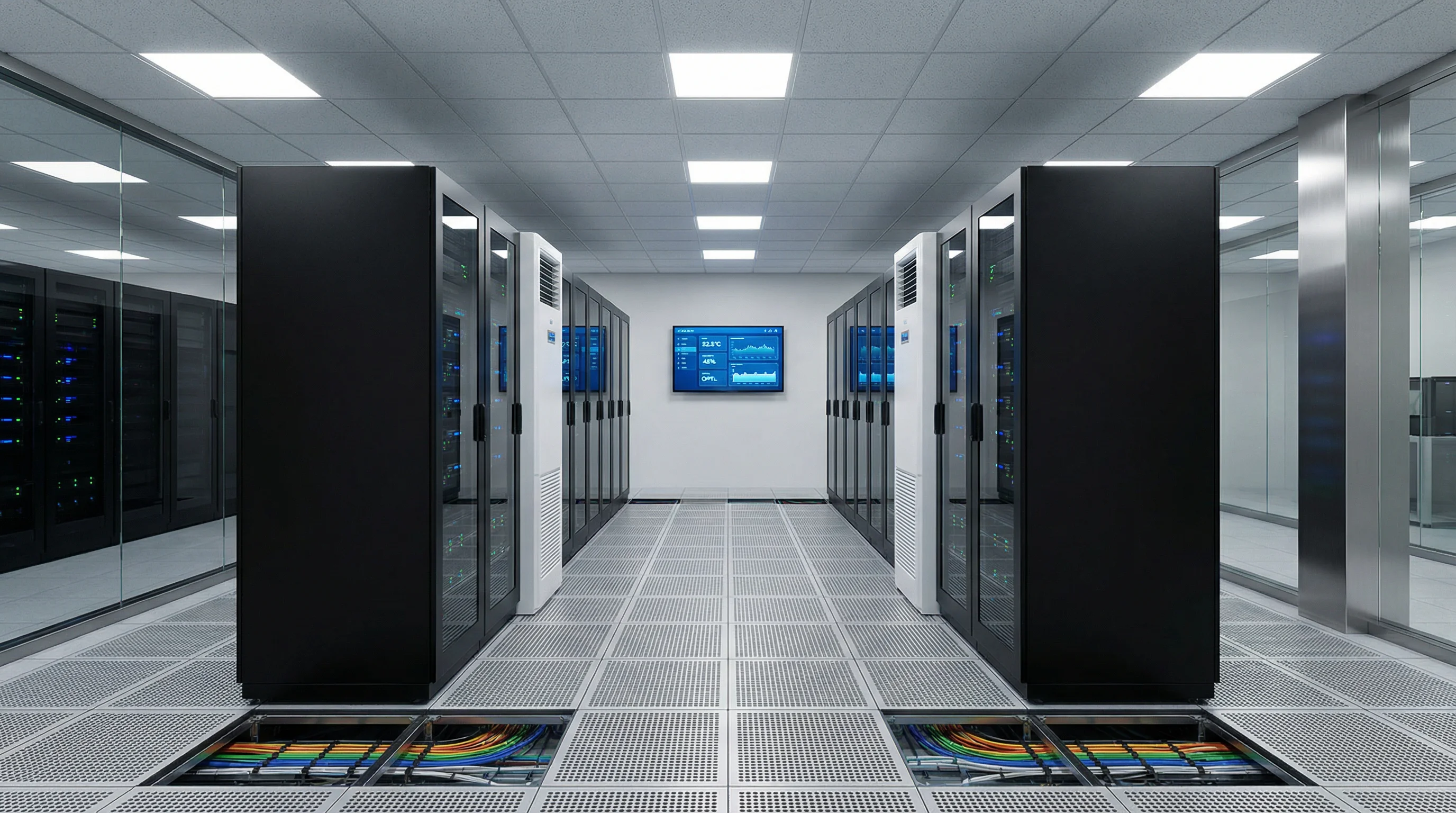
Figure 1.2: In-Row Precision Cooling Units in a Financial Data Center
1.3 Sensing and Monitoring Layer
The Sensing and Monitoring Layer provides real-time data acquisition from all critical environmental and operational parameters throughout the system. This data forms the foundation for intelligent control decisions and predictive maintenance.
1.3.1 Temperature and Humidity Sensors
High-precision sensors are deployed at multiple locations including outdoor air intake, supply air ducts, cold aisle, hot aisle, and return air paths. Specifications include temperature accuracy of ±0.3°C, humidity accuracy of ±2% RH, response time under 30 seconds, and digital output (Modbus RTU or 4-20mA) for direct integration with controllers.
1.3.2 Differential Pressure Sensors
These sensors monitor pressure differences across filters (to indicate filter loading), across dampers (to verify position), and between cold aisle and hot aisle (to ensure proper airflow containment). Typical range is 0-500 Pa with accuracy of ±1% full scale.
1.3.3 Air Quality Sensors
Air quality monitoring includes CO₂ concentration (range 0-2000 ppm), PM2.5 particulate matter (range 0-500 μg/m³), and gaseous contaminants when required. These sensors provide early warning of filter saturation or outdoor air quality degradation.
1.3.4 Power Meters
Integrated power meters measure real-time electrical consumption of all major components including fans, compressors, pumps, and control systems. This data enables precise PUE calculation and energy optimization. Meters provide accuracy of ±0.5% with data logging at 1-minute intervals.
1.4 Control and Intelligence Layer
The Control and Intelligence Layer integrates all sensor data, executes control algorithms, and manages system operation to achieve optimal performance, reliability, and energy efficiency.
1.4.1 Central Intelligent Controller
The central controller is a dual-redundant (hot standby) industrial-grade PLC or embedded controller that serves as the brain of the entire system. It executes real-time control logic at 1-second intervals, manages mode transitions (natural cooling vs. mechanical cooling), coordinates equipment sequencing, and provides fail-safe protection. The controller features redundant power supplies, industrial-grade components rated for 0-50°C ambient temperature, and non-volatile memory for data retention during power interruptions.
1.4.2 Control Algorithms
Advanced control algorithms optimize system performance through multiple strategies. The Natural Cooling Maximization algorithm continuously evaluates outdoor conditions and calculates the optimal fresh air damper position and mechanical cooling supplement. The Load-Based Capacity Control algorithm modulates fan speeds and compressor capacity based on real-time cooling demand. The Predictive Control algorithm uses historical data and weather forecasts to anticipate load changes and pre-adjust system settings.
1.4.3 Local HMI (Human-Machine Interface)
The local HMI is a touchscreen panel (typically 10-15 inches) installed in the data center or control room for on-site monitoring and control. It displays real-time system status, alarm notifications, historical trends, and provides manual override capabilities for maintenance operations. The interface supports multi-user access with role-based permissions.
1.4.4 Remote DCIM/BMS Integration
The system provides standard communication protocols (Modbus TCP, BACnet IP, SNMP, OPC UA) for integration with upper-level Data Center Infrastructure Management (DCIM) or Building Management Systems (BMS). This integration enables centralized monitoring across multiple data centers, consolidated alarm management, and enterprise-level energy reporting.
1.5 Component Interdependencies
Understanding the interdependencies between components is critical for proper system design and troubleshooting. The following table summarizes key dependencies:
| Component | Depends On | Provides To | Failure Impact |
|---|---|---|---|
| Temperature Sensors | Power supply, Controller | Control algorithms | Loss of feedback, manual operation required |
| Electric Dampers | Controller signals, Power | Airflow regulation | Fixed position, loss of natural cooling optimization |
| VFD Fans | Controller signals, Power, Pressure sensors | Air circulation | Reduced airflow, potential hot spots |
| Precision Air Conditioners | Controller signals, Power, Chilled water | Mechanical cooling capacity | Increased reliance on natural cooling or backup units |
| Central Controller | Sensors, Power, Network | Control signals to all equipment | Failover to redundant controller, or manual operation |
| HMI | Controller, Network | Operator interface | Loss of local monitoring, remote access still available |
1.6 Bill of Materials (BOM) Template
A typical medium-scale deployment (500 cabinets, 2 MW IT load) requires the following major components. Actual quantities and specifications should be determined through detailed load calculations and site assessments:
| Component Category | Item Description | Typical Quantity | Unit Specifications |
|---|---|---|---|
| Fresh Air Path | Air Handling Unit (AHU) with filters, dampers, fans, coils | 2 units (N+1) | 50,000 m³/h each |
| Indoor Cooling | Precision Air Conditioners | 8 units (N+1) | 250 kW cooling each |
| Indoor Cooling | Fan Wall Systems | 4 units | 12 fans per unit, 100,000 m³/h total |
| Sensors | Temperature/Humidity Sensors | 40 units | ±0.3°C, ±2% RH |
| Sensors | Differential Pressure Sensors | 12 units | 0-500 Pa range |
| Sensors | Air Quality Sensors (CO₂, PM2.5) | 8 units | 0-2000 ppm CO₂ |
| Control | Central Controller (Dual Redundant) | 2 units | Industrial PLC with I/O modules |
| Control | Local HMI Touchscreen | 2 units | 15-inch industrial touchscreen |
| Infrastructure | Control Cabinets with Power Distribution | 2 units | IP54 rated, with UPS backup |
| Infrastructure | Network Switches for Control Network | 2 units | Industrial Ethernet, redundant ring |