Scenario-Based System Selection
Different data center scenarios require different cooling system configurations to optimize performance, reliability, and cost-effectiveness. This chapter provides guidance on selecting the appropriate system architecture based on data center type, scale, location, and operational requirements.
3.1 Hyperscale Data Centers
Hyperscale data centers are characterized by large-scale deployments (typically >1000 cabinets), high power densities (5-15 kW per cabinet), and aggressive PUE targets (<1.3). These facilities prioritize energy efficiency and operational cost reduction over capital cost.
3.1.1 Recommended Configuration
For hyperscale data centers, the recommended configuration includes centralized air handling units with large-capacity fresh air economizers (100,000-500,000 m³/h per unit), Fan Wall systems for efficient air distribution with N+2 redundancy, hot aisle containment with overhead return air plenums, and centralized chilled water plants with free cooling chillers. This configuration maximizes natural cooling hours and minimizes fan energy through low-velocity, high-volume airflow.

Figure 3.1: Hyperscale Data Center with Fan Wall Systems and Containment
3.1.2 Key Design Considerations
Key design considerations for hyperscale facilities include maximizing free cooling hours through aggressive economizer setpoints (up to 27°C supply air temperature), implementing aisle containment to eliminate air mixing and improve cooling efficiency, deploying distributed Fan Walls rather than centralized CRAC units to reduce single points of failure, and utilizing advanced controls with machine learning for predictive optimization.
3.2 Financial and Enterprise Data Centers
Financial and enterprise data centers typically have moderate scale (200-1000 cabinets), mixed power densities (3-8 kW per cabinet), and stringent reliability requirements. These facilities prioritize uptime and environmental stability over aggressive energy optimization.
3.2.1 Recommended Configuration
The recommended configuration includes in-row precision air conditioners with N+1 or N+2 redundancy for close-coupled cooling, moderate-capacity fresh air economizers (20,000-50,000 m³/h) with conservative setpoints to ensure stability, cold aisle containment with raised floor distribution, and dual-redundant control systems with manual override capabilities. This configuration provides high reliability and tight environmental control while still achieving reasonable energy efficiency.
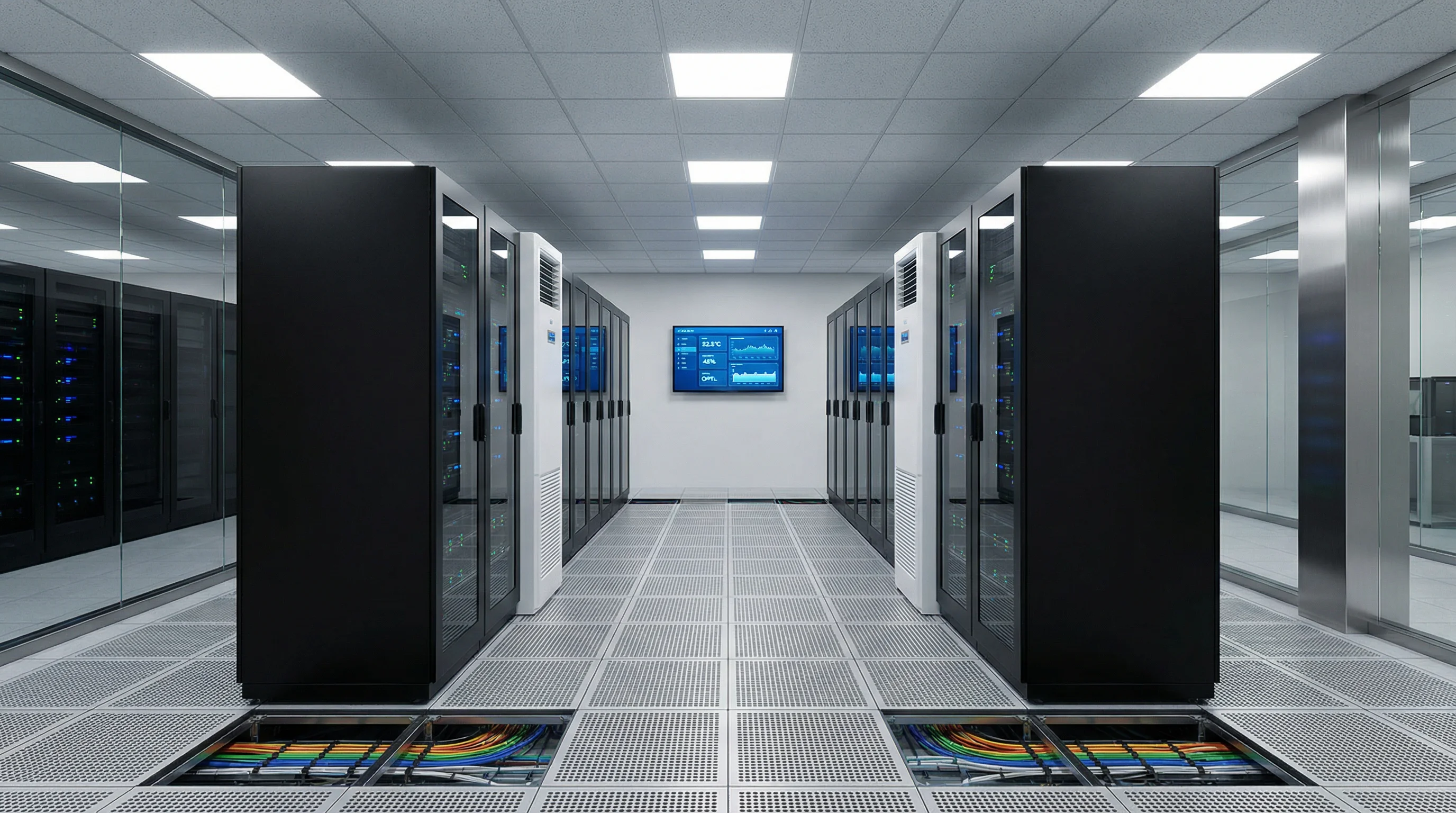
Figure 3.2: Financial Data Center with In-Row Cooling and Raised Floor
3.2.2 Key Design Considerations
Key considerations include maintaining tight temperature and humidity tolerances (22±1°C, 50±5% RH) to meet stringent SLAs, implementing N+1 or higher redundancy at all levels (cooling units, fans, controls, power), providing seamless failover capabilities with no service interruption, and integrating with existing BMS and security systems for unified management.
3.3 Retrofit and Upgrade Projects
Retrofit projects involve adding fresh air economization and intelligent controls to existing data centers with legacy cooling systems. These projects face unique challenges including space constraints, integration with existing equipment, and minimizing disruption to operations.
3.3.1 Recommended Approach
The recommended approach includes phased implementation to avoid operational disruption, modular air handling units that can be installed in available spaces (rooftop, adjacent rooms, outdoor), integration controllers that interface with existing CRAC/CRAH units, and ductwork designed to work with existing raised floor or overhead distribution systems.
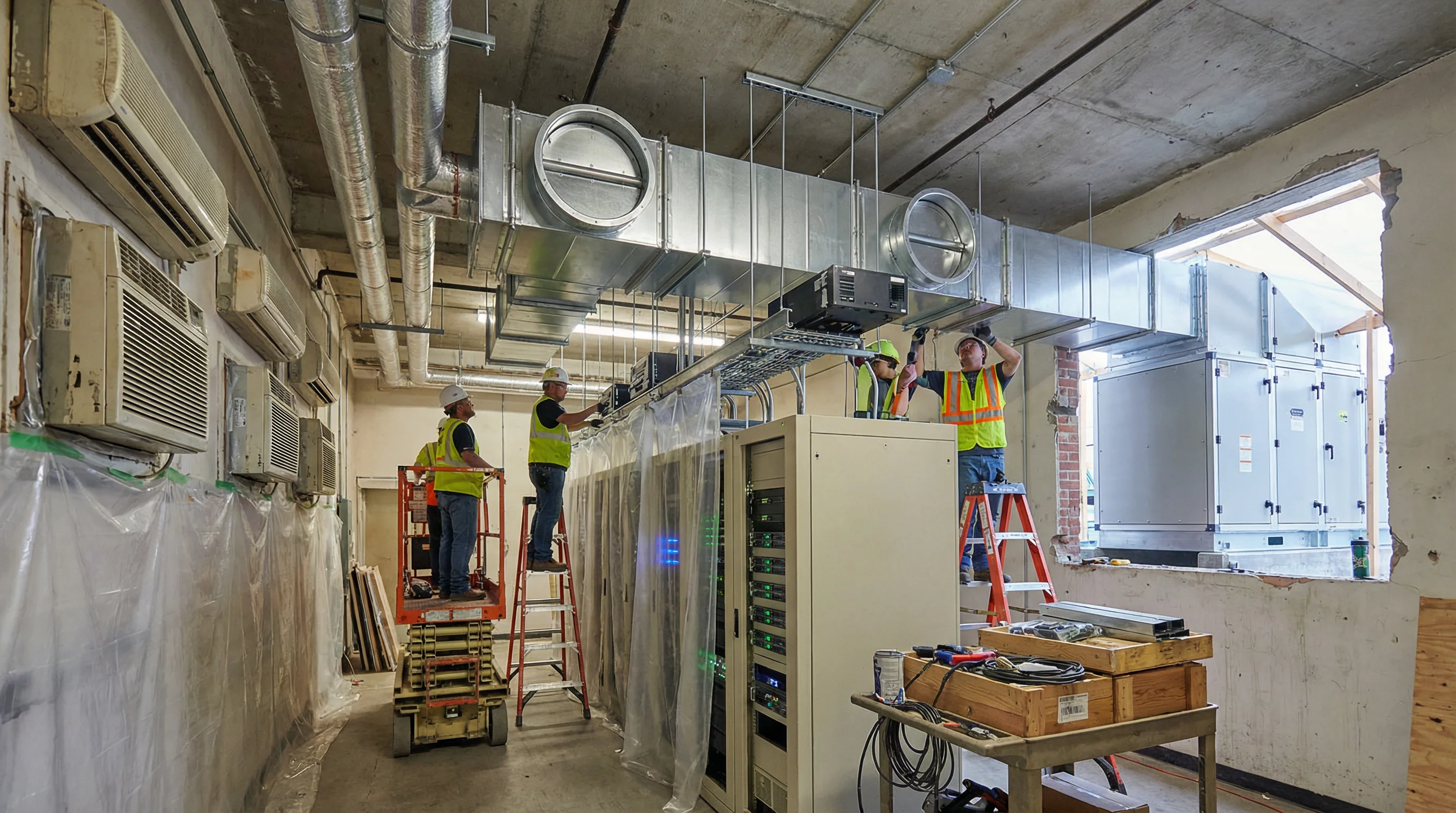
Figure 3.3: Retrofit Project Showing New Ductwork and AHU Installation
3.4 Selection Decision Matrix
The following decision matrix helps guide system selection based on key project parameters:
| Scenario Type | Scale (Cabinets) | Power Density | Cooling Topology | Redundancy Level | Target PUE |
|---|---|---|---|---|---|
| Hyperscale | >1000 | 5-15 kW/cab | Centralized AHU + Fan Walls | N+1 to N+2 | <1.3 |
| Financial/Enterprise | 200-1000 | 3-8 kW/cab | In-Row + Economizer | N+1 to 2N | 1.3-1.5 |
| Colocation | 500-2000 | 4-10 kW/cab | Hybrid (Room + Row) | N+1 | 1.4-1.6 |
| Edge/Regional | 50-200 | 3-6 kW/cab | Room-Level CRAC + Economizer | N+1 | 1.5-1.8 |
| Retrofit | Varies | 2-6 kW/cab | Add-on Economizer + Existing | Maintain Existing | 1.6-2.0 → 1.4-1.6 |
3.5 Climate Zone Considerations
The local climate significantly impacts the effectiveness of fresh air economization and should be a primary factor in system selection and configuration.
3.5.1 Cold Climate Zones (Annual Avg <10°C)
Cold climates offer the highest potential for natural cooling, with free cooling available for 6000-8000 hours per year. Recommended strategies include aggressive economizer setpoints (up to 27°C outdoor temperature), direct air economization to maximize free cooling hours, and humidification systems to address dry winter air.
3.5.2 Temperate Climate Zones (Annual Avg 10-20°C)
Temperate climates provide moderate free cooling opportunities (3000-5000 hours per year). Recommended strategies include hybrid economization (direct air + indirect evaporative), seasonal mode switching between full economization and mechanical cooling, and thermal storage to shift cooling loads to cooler nighttime hours.
3.5.3 Hot Climate Zones (Annual Avg >20°C)
Hot climates have limited free cooling potential (1000-2000 hours per year) and require careful evaluation of economizer ROI. Recommended strategies include indirect evaporative cooling to extend free cooling hours, nighttime ventilation for thermal mass cooling, and high-efficiency mechanical cooling as the primary cooling method with economizers for shoulder seasons only.